
By:
Europe’s Expanding Space Cooperation with Southeast Asia
Over the past decade, Europe has extended its cooperation with Southeast Asia in the field of space. Partnerships between European institutions and ASEAN member states focus intensely on EO implementation that support disaster management, environmental monitoring, and maritime field awareness. These areas are particularly relevant to Southeast Asia, where exposure to natural hazards and environmental change creates an increasing requirement for reliable satellite based information.
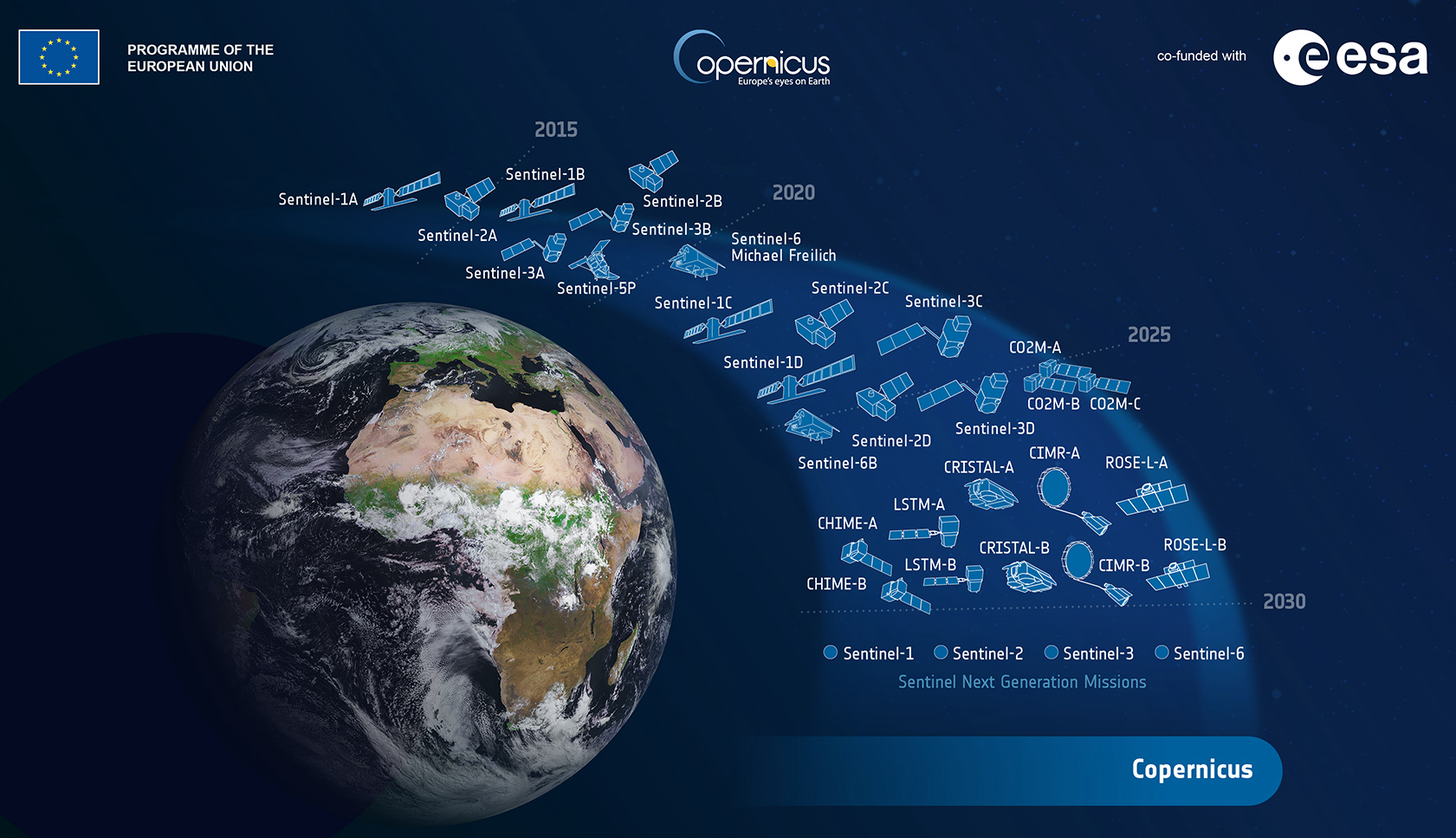
European partaking in the space area is shaped by a governance approach that emphasises publicly accessible EO services and international cooperation. Institutions such as the European Space Agency (ESA) and the European Commission have played a central role in promoting satellite monitoring capabilities through initiatives such as the Copernicus Programme. These initiatives are designed not only to support European policy objectives, but additionally enable international partners to benefit from environmental space information.
For ASEAN countries seeking to increase their capability in satellite data, cooperation with European partners offers access to both technological advancement and governance experience. As EO becomes embedded in environmental management and disaster preparedness across Southeast Asia, European governance frameworks are therefore transpiring as an important external reference for policymakers in the region.
The European EO Governance Model
Europe’s EO architecture is unique in the way that it combines technological infrastructure with governance frameworks that prioritise public sector utilisation and international accessibility. Programmes such as Copernicus provide a wide range of environmental monitoring services that support policy areas including climate change, land use, maritime surveillance, and disaster management. A key feature of this model is the qualification of open and freely accessible satellite data, allowing public institutions, researchers, and private actors to integrate EO into a wide range of operational activities.
Institutionally, Europe’s EO governance is formed by collaboration between multiple actors. The European Commission provides policy direction and programme management, while ESA supports satellite development and operational infrastructure. Together, these institutions have formed a governance system where satellite information services are closely incorporated with public policy objectives.
The European model provides an example of how EO infrastructure can be embedded within interdisciplinary government institutions and agencies, which is worth looking into for countries seeking to grow the role of EO in environmental governance structures. This approach to EO has attracted attention beyond Europe itself. As ASEAN member states continue to develop national space institutions and satellite programmes, aspects of this governance model are gradually entering policy discussions across the region.
Selective Adaptation in ASEAN Institutions
Despite growing engagement with European partners, ASEAN states are not simply replicating European governance structures. Instead, the influence of European EO programmes are transpiring mainly through processes of adopting and adapting certain policies and practices to fit local condition. Hence, national space agencies and government institutions across Southeast Asia are observing how EO systems can support environmental governance and disaster management, while adapting these approaches to national institutional contexts emerge.
This process is already visible in the way several ASEAN countries are expanding the role of EO within national policies. Satellite data is constantly used to support flood monitoring, detect forest fire, maritime surveillance, and agricultural planning. These implementations reflect many of the policy areas addressed by European EO services, highlighting the practical relevance of the European governance model for other countries facing similar environmental challenges.
At the same time, institutional differences between Europe and Southeast Asia mean that governance structures will likely grow along different trajectories. Whereas Europe has developed highly integrated institutional mechanisms for managing satellite programmes and data services, ASEAN’s space governance landscape remains primarily organised around national institutions. Regional coordination is therefore more likely to transpire through increased cooperation and policy learning rather than through centralised governance structures.
In this context, European governance frameworks function less as a template for replication and more as a source of policy inspiration. By demonstrating how satellite-based monitoring systems can support environmental governance at scale, Europe’s EO programmes contribute to shape policy discussions across Southeast Asia while leaving considerable room for regional adaptation.
Strategic Implications for ASEAN Space Governance
The growing interaction between European EO programmes and ASEAN space policy has several implications for the future development of regional space governance. First, European cooperation reinforces the central role of EO applicability within Southeast Asia’s space sector. Rather than focusing primarily on upstream technological capabilities (e.g. innovation, R&D) such as launch systems or satellite manufacturing, many ASEAN countries are prioritising downstream implementation that directly support environmental monitoring, disaster management, and maritime governance.
Second, European governance frameworks highlight the importance of institutional coordination in maximising the value of EO data. The integration of satellite-based monitoring systems into public policy requires technological infrastructure as well as governance arrangements that facilitate data sharing, operational coordination, and cross-sectoral cooperation. As ASEAN countries continue to extend their EO capabilities, the development of such governance mechanisms may become an increasingly important policy priority.
Finally, Europe’s engagement with Southeast Asia demonstrates how international partnerships can influence the development of regional space governance without imposing a uniform institutional models. Through programmes which focus on cooperation, technical exchanges, and institution building, European space actors contribute to shape policy discussions in ASEAN while allowing national governments to adapt governance approaches to their own institutional contexts.
Taken together, these dynamics suggest that Europe’s most significant contribution to Southeast Asia’s space sector may lie less in the transfer of technology and more in the diffusion of governance ideas surrounding the use of EO for public sector decision making.
What to Watch: EU–ASEAN EO Cooperation
As EO becomes increasingly central to environmental governance in Southeast Asia, cooperation between European and ASEAN institutions is likely to expand more. Future initiatives may focus on strengthening data-sharing systems, developing joint environmental monitoring applications, and supporting regional capacity strengthening programmes. In particular, the continued engagement of institutions such as the European Space Agency and the European Commission with ASEAN partners may play an important role in shaping how satellite environmental services grow across the region. Monitoring the development of these cooperation initiatives will therefore provide valuable insight into the future course of ASEAN space governance.
Sources and References (Indicative)
- Public sector policy materials developed by ASEAN national space institutions, including Indonesia’s National Research and Innovation Agency (BRIN), Malaysia’s Malaysian Space Agency, and Thailand’s Geo-Informatics and Space Technology Development Agency.
- Publications and programme documentation from the European Space Agency and the European Commission relating to the Copernicus Programme and European EO governance.
- Policy reports and analytical publications addressing the role of satellite-based EO in environmental monitoring, disaster management, and maritime governance.