
By:
Environmental Pressure and the Growing Demand for Earth Observation
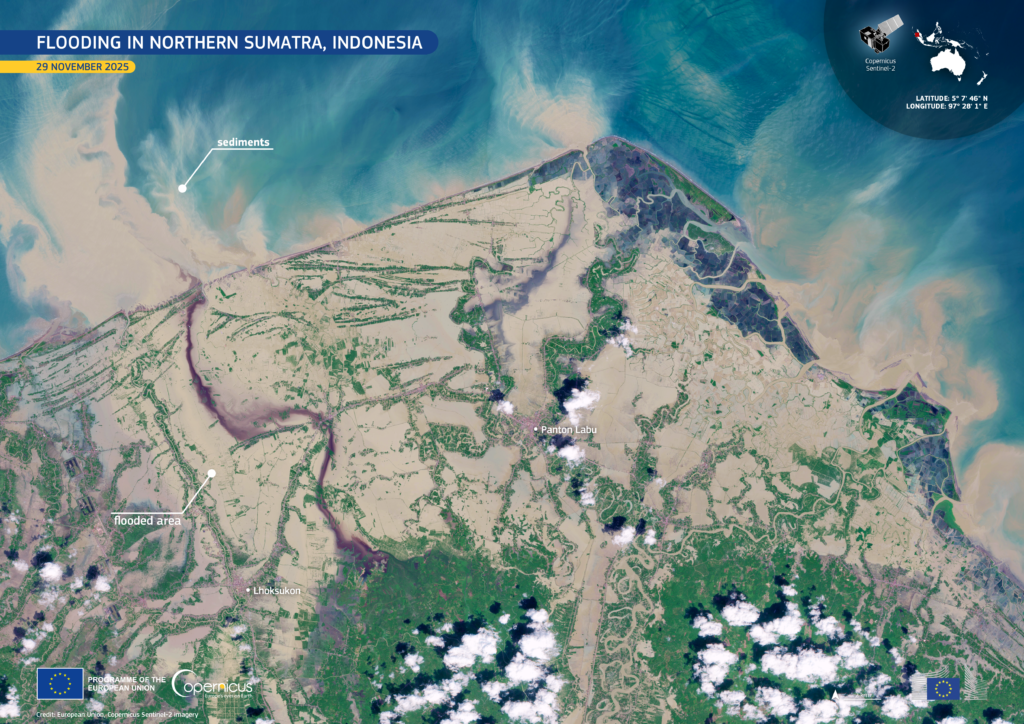
Southeast Asia is one of the most environmentally exposed regions in the world. Seasonal flooding, forest fires, illegal fishing activities, and the requirement to monitor maritime activities create a perpetual requirement for effective Earth observation (EO) services. In this context, the ASEAN member states are increasing the scope of satellite-based data services to support disaster response, environmental surveillance, and resource management activities. While these challenges are regional, the underlying systems of governance which are supporting EO remain largely national. In turn, this is creating growing pressure for greater coordination across the region.
Governance Fragmentation
Across Southeast Asia, states have begun establishing their own institutional infrastructure for integrating their growing use of space data. Several ASEAN states have established their own space agencies or programs to promote the development of satellite systems, coordinate their use of EO systems, and expand the use of space-based services for various sectors of their governments. For instance, the National Research and Innovation Agency of Indonesia (BRIN), the Malaysian Space Agency (MYSA), and the Geo-Informatics and Space Technology Development Agency of Thailand (GISTDA) illustrate the increasing trend for national institutions to take the lead in managing their satellite systems and EO systems.
The trend for nations in Southeast Asia to establish their own space agencies or programs reflects an emerging realisation that satellite systems can support numerous public policy objectives. Several ASEAN states have turned to the use of EO systems for disaster response, environmental management, maritime domain awareness, and agricultural planning. National agencies have begun investing in their own satellite programs, infrastructure, and partnerships with international space actors around the world.
Yet while institutional capacity at the national level is expanding, regional coordination in Southeast Asia remains limited. ASEAN is more likely to deal with space cooperation through dialogue and technical exchange, rather than through the creation of a centralised system. Nonetheless, EO governance in ASEAN is still largely based on individual countries, in spite of the fact that some of the environmental and maritime issues are shared in the region.
This institutional fragmentation does not prevent cooperation. However, it does affect the way cooperation is done. Instead of cooperation emerging in a centralised system of governance, it is likely to develop through a series of policy learning, hands-on joint efforts, and the gradual alignment of individual national approaches.
How Regional Coordination Emerges
Even though Southeast Asia faces a diverse array of institutions, the region is gradually merging together the efforts in EO. Instead of a single centralised structure, the process is proceeding along a hybrid path shaped by policy learning, interaction with external organisations, and environmental challenges.
Intra-ASEAN Policy Learning
With the development of various space programs in ASEAN, member states are now becoming more aware of the activities their neighbouring states are undertaking in the field. The development of space agencies, satellite programs, and space regulations in several ASEAN states has created an environment where policy experimentation in one country could gradually bring its practices in line with those of the others, even in the absence of formal regional-level bodies that could direct this process.
External Institutional Spill overs
International collaborations play an essential role in influencing how the overall governance of ASEAN is affected. When ASEAN states partner with external space actors, such as legacy space agencies and other international players, they are exposed to the regulatory frameworks, technical standards, and data management approaches of these external space actors. This influences ASEAN’s conversation of how to govern their respective states. Rather than directly imitating the overall governance models of other actors, ASEAN states tend to adapt certain components selectively, depending on how they relate to their own domestic and institutional priorities, ensuring national autonomy and control.
Environmental Pressure as a Coordination Driver
Mutual environmental matters in ASEAN are forcing member states to work together. Floods, forest fires, maritime surveillance, and illegal fishing activities are not limited by national borders and therefore require continuous EO activities over large regions. As a result, EO is providing opportunities to share data, track activities, and standardize approaches. Thereby, environmental issues are creating opportunities for cooperation, even in regions with limited formal regional governance.
Overall, these trends are quietly creating a new hybrid model of governance. While national institutions remain at the heart, cooperation is achieved through shared policy approaches, international engagement, and the mutual operational needs that bring neighbouring states together.
Strategic Implications
The rise of the EO market in ASEAN suggests a future where the region’s space development will be shaped by its approach to cooperation and governance. While many of the ASEAN states are strengthening their respective satellite programs, the idea of a centralised governance body, such as the European governance model, is unlikely to materialise in Southeast Asia. Southeast Asia’s space architecture is more likely to develop through a hybrid approach in which national institutions remain dominant while regional coordination emerges gradually through practical cooperation and policy learning.
This situation makes the field of EO applications a promising edge for ASEAN. Given the region’s exposure to environmental risks and maritime challenges, satellite-based monitoring already plays an increasingly important role in disaster management, environmental protection, and maritime domain awareness. Enhanced collaboration in these activities, particularly in the context of data sharing and operational frameworks, is likely to enhance the level of success of national investments in EO capabilities.
The external partnerships will continue to influence the development of the governance frameworks in the ASEAN region. This is because the established space actors in the space industry will impart their technical standards, regulatory practices, and operational models into the national policies of the ASEAN states. However, the ASEAN members are more likely to adopt the frameworks in a selective fashion, as opposed to a unified form of a centralised institution.
In this regard, the trajectory of ASEAN’s space programs is about transforming mutual environmental challenges into unified and well-coordinated governance solutions.
What to Watch: Regional EO Data Coordination
As the domain of EO continues to grow in Southeast Asia, the next major step will be governance adjustments that allow more systematic data sharing and operational coordination between national space agencies. Traditionally, ASEAN has relied on dialogue platforms and technical exchanges. Yet the rising environmental challenges may encourage actual collaboration in areas such as disaster monitoring, maritime surveillance, and environmental management. Initiatives that promote the sharing of compatible information standards, joint monitoring systems, or regional space observation services have the potential to become the key determinants in shaping the future of ASEAN space governance.
Sources and References (Indicative)
- Public sector policy materials developed by national civil space institutions across ASEAN member states, including Indonesia’s National Research and Innovation Agency (BRIN), Malaysia’s Malaysian Space Agency (MYSA), and Thailand’s Geo-Informatics and Space Technology Development Agency (GISTDA).
- Publications by the Association of Southeast Asian Nations on regional science, technology, and space cooperation initiatives.
- Documentation from European Earth observation programmes, including the European Space Agency and the European Commission Copernicus programme, on governance models for public-sector Earth observation services.